
The Road Ahead: A Blueprint for Your Transport Business Venture
Why Starting a Transport Business Matters
A transport business moves people or goods from one location to another. It’s a lucrative venture in today’s logistics-driven economy, with opportunities in freight hauling, courier services, passenger transport, and more.
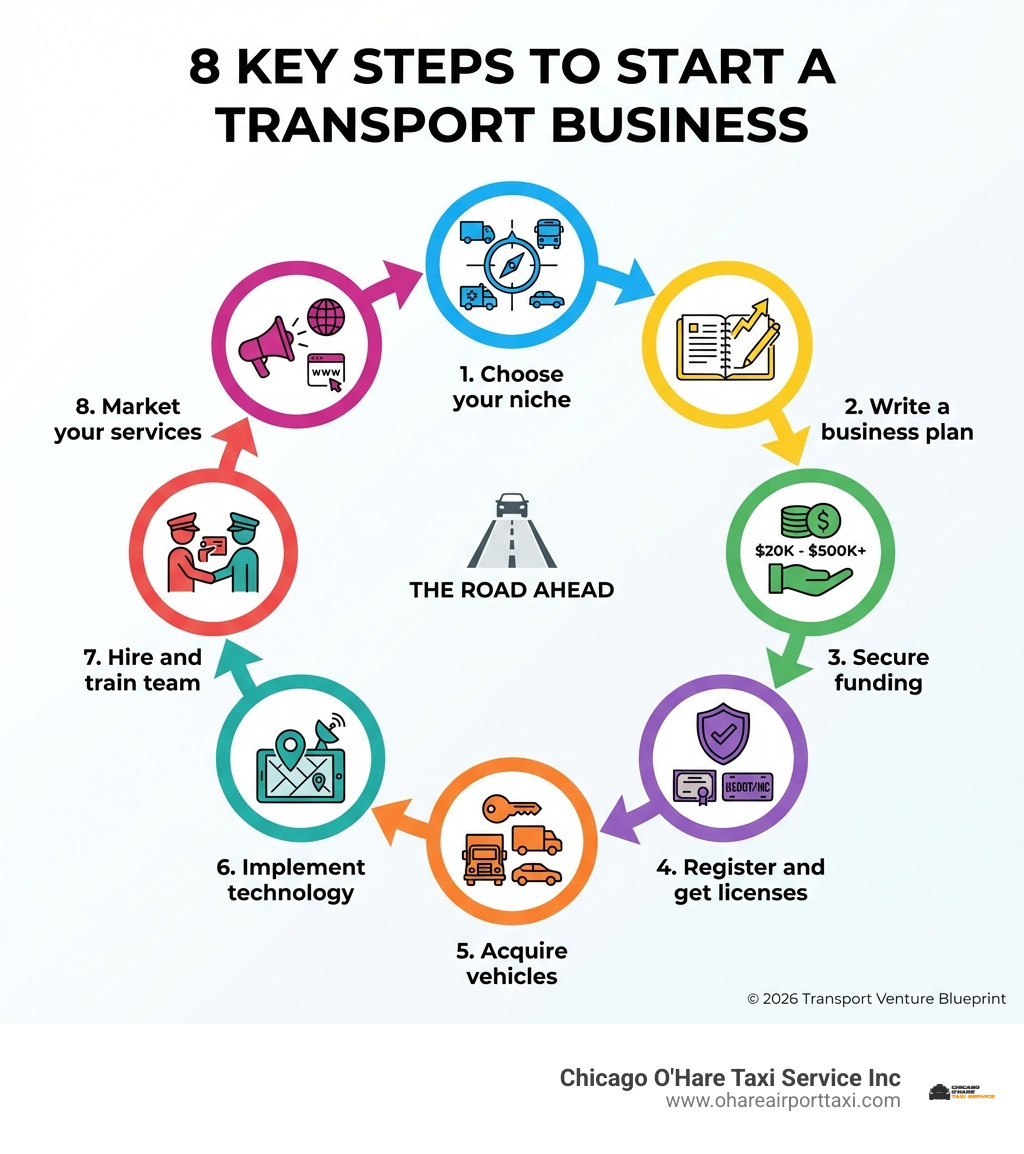
Quick Answer: Starting a Transport Business
- Choose your niche – Freight, passengers, medical transport, or moving services
- Write a business plan – Define your market, services, and financial projections
- Secure funding – Budget $20,000 to $500,000+ for vehicles, licenses, and operations
- Get legal – Register your business, obtain licenses (USDOT, MC), and secure insurance
- Build your fleet – Purchase or lease vehicles suited to your service type
- Implement technology – Add GPS, dispatch systems, and booking platforms
- Hire and train drivers – Ensure proper licensing and customer service skills
- Market your services – Build a website, list on directories, and network with partners
The demand for transportation is booming. An aging population is driving growth in Non-Emergency Medical Transportation (NEMT), while e-commerce fuels the need for freight and courier services. This creates flexible entry points and strong growth potential, whether you start with one van or a full fleet.
Launching a successful transport business requires careful planning, capital, and regulatory knowledge. Startup costs typically range from $20,000 to $500,000, covering vehicles (new vans cost $25,000-$43,000), licensing ($1,000-$3,000), and insurance ($5,000-$10,000 annually). The financial rewards can be substantial, with average NEMT providers earning around $500,000 per year and revenue per vehicle ranging from $30,000 to $56,000 annually.
I’m Ahmad A., owner of Chicago O’Hare Taxi Service Inc., a transport business specializing in reliable airport transfers. My experience has given me insight into running a successful, customer-focused transportation company.
This guide will walk you through every step of launching your transport business, from choosing a niche and writing a business plan to acquiring vehicles and marketing your services. You’ll find actionable insights to help you steer this complex but rewarding industry.
Laying the Groundwork: Planning Your Transportation Venture

Before you turn the ignition, a solid plan is crucial. This phase involves researching your market, defining your services, and understanding the transportation industry.
Choosing Your Niche: Types of Transportation Businesses
The transportation industry is vast. Identifying a niche that aligns with your resources and local market demand is key to success. Common transport business ventures include:
- Freight Hauling: Transporting goods and cargo, from local deliveries to long-haul shipments.
- Courier Services: Delivering packages and documents with an emphasis on speed and local reach.
- Private Passenger Transportation: Includes airport shuttles, local taxis, and on-demand ride services.
- Premium and Executive Transport: Offering luxury vehicles and chauffeurs for corporate clients and special events.
- Non-Emergency Medical Transportation (NEMT): An expanding market providing rides for patients to medical appointments.
- Moving Services: Assisting individuals and businesses with relocation.
- Senior Transportation: Catering to the elderly with rides for errands, social outings, or appointments.
For those with limited capital, low-cost ideas like local courier services, specialty delivery, or airport transfers to areas like Arlington Heights or Schaumburg are great entry points.
Crafting Your Blueprint: How to Write a Comprehensive Business Plan
A detailed business plan is your roadmap for success and is essential for securing funding. Use the U.S. Small Business Administration’s business plan guide as a template. Key sections include:
- Executive Summary: A concise overview of your mission, services, and financial highlights.
- Company Description: Details on your legal structure and unique selling propositions.
- Market Analysis: An examination of your target market, competition, and growth potential in areas like Buffalo Grove or Palatine.
- Fleet & Operations Plan: Your vehicle acquisition strategy, maintenance schedule, and daily procedures.
- Marketing Strategy: How you’ll attract and retain clients.
- Financial Projections: Forecasts of startup costs, revenue, and profitability.
Weighing the Pros and Cons
Understanding the advantages and challenges helps you prepare for the journey ahead.
Advantages:
- High Demand: Transportation is an ever-present and growing need.
- Scalability: You can start small with one vehicle and expand as revenue grows.
- Flexibility: Many niches allow for flexible schedules.
- Community Impact: Services like NEMT provide a vital community benefit.
Challenges:
- High Startup Costs: Vehicles, licensing, and insurance require significant capital.
- Regulatory Problems: The industry is heavily regulated and complex.
- Fuel Price Volatility: Fluctuating fuel prices can impact profit margins.
- Maintenance and Downtime: Unexpected repairs can cause service disruptions.
Skills and Qualifications for Success
A successful transport business demands a diverse skill set:
- Logistics Management: Efficiently planning routes and scheduling vehicles.
- Financial Acumen: Budgeting, expense tracking, and managing cash flow.
- Customer Service Skills: Building strong client relationships through professionalism.
- Regulatory Knowledge: Staying informed about transportation laws and safety standards.
- Problem-Solving: Quickly addressing unexpected issues like traffic delays or breakdowns.
The Financial Roadmap: Funding and Costs for Your Transport Business
This section details the financial journey, from securing capital to managing expenses and maximizing profitability.
Estimating Startup Costs
Launching a transport business requires a significant investment, with costs varying by niche and scale. Startup costs typically range from $20,000 to $500,000. Key components include:
- Vehicle Acquisition: This is the largest expense. New cargo vans cost $25,000-$30,000, while passenger vans are $28,000-$43,000. Specialized NEMT vehicles can be $16,000-$83,000.
- Licensing & Permits: Expect to spend $1,000 to $3,000.
- Insurance Deposits: Annual fleet insurance can run $5,000 to $10,000, often requiring an upfront deposit.
- Marketing Budget: An initial budget of $2,000 to $5,000 is common.
- Technology Setup: Costs for dispatch systems, GPS, and booking platforms.
Here’s a table comparing potential startup costs for different niches:
| Cost Category | NEMT (Non-Emergency Medical Transport) | Freight (Local Courier/Van) | Premium Passenger Transport (Sedan/SUV) |
|---|---|---|---|
| Vehicle Acquisition | $16,000 – $83,000 (per vehicle) | $25,000 – $30,000 (per van) | $40,000 – $90,000 (per luxury vehicle) |
| Special Equipment | $7,500 – $15,000 (wheelchair/stretcher) | $500 – $2,000 (straps, dollies) | $0 – $1,000 (child seats, amenities) |
| Licensing & Permits | $1,000 – $3,000 | $500 – $2,000 | $500 – $2,500 |
| Insurance (Annual) | $5,000 – $10,000 | $3,000 – $8,000 | $4,000 – $12,000 |
| Initial Marketing | $2,000 – $5,000 | $1,000 – $3,000 | $2,000 – $7,000 |
| Technology Setup | $1,000 – $3,000 | $500 – $2,000 | $1,000 – $4,000 |
| Total Startup Range | $40,000 – $80,000 | $30,000 – $45,000 | $50,000 – $120,000+ |
Understanding Ongoing Operational Costs
A successful transport business requires diligent management of recurring costs:
- Fuel: A major variable cost impacted by fuel prices and route efficiency.
- Vehicle Maintenance & Repairs: Regular maintenance is crucial for reliability. Monthly costs can be $1,500 to $3,000 for an NEMT business.
- Employee Salaries: A significant expense if you hire drivers (average NEMT driver earns ~$17/hour).
- Insurance Premiums: A continuous annual expense.
- Software Subscriptions: Fees for fleet management and dispatch tools.
- Marketing & Advertising: Ongoing efforts to attract new clients.
You can learn more about what you could earn in specific niches to weigh against these costs.
Revenue, Profitability, and Securing Funding
The goal is to generate revenue and achieve profitability. For NEMT, rates can range from $25 per ride to $250 per hour, with additional fees for waiting time or extra mileage. Revenue per vehicle can be $30,000 to $56,000 annually, with average providers making about $500,000 per year. Profitability hinges on managing costs and setting competitive rates.
Securing Funding: If you need external funding, options include:
- SBA Loans: See the SBA website for small business funding programs.
- Equipment Financing: Loans specifically for purchasing vehicles.
- Angel Investors or Venture Capital: For high-growth ventures.
- Personal Savings or Loans: A common starting point for many entrepreneurs.
Navigating the Legal Maze for Your Transport Business
Compliance is non-negotiable in the transportation industry. Navigating legal requirements is a critical step toward building a legitimate and sustainable enterprise.
Essential Legal Structure and Registration
Before picking up your first client, establish your legal foundation:
- Business Structure: Choose a legal structure like a Sole Proprietorship, Limited Liability Company (LLC), or Corporation (S Corp or C Corp). LLCs and corporations offer personal liability protection.
- Business Name Registration: Register your business name with state and local authorities.
- Federal Employer Identification Number (EIN): Get an EIN from the IRS if you plan to hire employees or operate as a corporation. The service is available Monday to Friday online.
- Business Bank Account: Open a dedicated business bank account to separate personal and business finances, which simplifies accounting and maintains your legal liability protection.
Securing Necessary Permits and Licenses
The permits required for a transport business depend on your service type, vehicle weight, and area of operation.
- USDOT Number: Required for commercial vehicles over 10,001 pounds, or those carrying over 8 passengers for compensation in interstate commerce.
- Motor Carrier (MC) Number: Needed for businesses transporting passengers or regulated goods across state lines for hire. Apply for both USDOT and MC numbers through the Federal Motor Carrier Safety Administration (FMCSA).
- Commercial Driver’s License (CDL): Drivers need a CDL to operate vehicles over 26,001 pounds, carry 16+ passengers, or transport hazardous materials.
- State & Local Permits: Research specific requirements for your state and city, such as Des Plaines or Evanston. These can include business licenses, vehicle registrations, and taxi permits. The Small Business Administration offers guidance.
Must-Have Insurance Coverage
Insurance protects your transport business from financial ruin. Essential coverage includes:
- Commercial Auto Liability: Covers bodily injury and property damage to others in an at-fault accident.
- General Liability: Protects against claims of injury or damage occurring on your premises or from your operations (not vehicle-related).
- Cargo Insurance: Protects against loss or damage to the goods you are transporting.
- Workers’ Compensation: Required if you have employees, covering on-the-job injuries.
- Non-Owned Vehicle Liability: Covers liability if employees use their personal vehicles for business.
- Umbrella Liability: Provides extra coverage beyond your primary liability policy limits.
Building Your Operations: Fleet, Tech, and Team
With the planning and legal framework in place, it’s time to build the operational core of your business: your vehicles, technology, and people.
Acquiring Your Fleet: Key Considerations
Your fleet is the heart of your transport business, impacting service quality and profitability.
- New vs. Used Vehicles: New vehicles offer reliability and warranties but are more expensive. Used vehicles reduce startup costs but may have higher repair expenses. A used van for airport transfers in Hoffman Estates can be a smart start.
- Passenger vs. Cargo: Choose based on your niche. Passenger vans are for comfort and safety, while cargo vans are optimized for freight.
- Fuel Efficiency & Maintenance: Research fuel efficiency and average maintenance costs to save money long-term.
- Leasing vs. Buying: Buying offers ownership and asset building but requires more capital. Leasing has lower monthly payments and allows for easier upgrades but builds no equity.
- Specialized Equipment: Your niche may require special equipment, like wheelchair ramps for NEMT or luxury amenities for executive transport.
At Chicago O’Hare Taxi Service Inc., we’re proud of Our Fleet of spacious, comfortable vehicles.
Leveraging Technology for Efficiency
Technology is a necessity for a competitive transport business. It streamlines operations and improves customer service.
- Fleet Management Software: Monitor vehicles, track locations, manage maintenance, and analyze driver performance.
- GPS Tracking: Essential for route optimization, driver safety, and providing accurate ETAs.
- Dispatch Systems: Automate job assignments for efficient resource allocation.
- Online Booking Portals: Allow clients to easily book services on your website.
- Route Optimization Tools: Reduce fuel consumption and driver time by finding the most efficient routes.
- Mobile Apps: For drivers (job management) and clients (booking and tracking).
Hiring and Training a Professional Team
Your drivers are the face of your transport business. Their professionalism reflects directly on your brand.
- Driver Qualifications: Set clear requirements, including a clean driving record and appropriate licenses (CDL if required).
- Background Checks: Essential for ensuring driver safety and trustworthiness.
- CDL Requirements: Ensure drivers have the correct CDL class for your vehicles if they meet CMV definitions.
- Customer Service Training: Train drivers on client interaction, handling difficult situations, and providing a pleasant experience.
- Safety Protocols: Regular training on defensive driving, emergency procedures, and safety regulations is crucial.
Driving Growth: Marketing, Partnerships, and Client Acquisition
A great service needs great marketing to attract customers and build relationships for long-term growth. Even the most efficient transport business won’t succeed without clients.
Marketing Your New Transport Business
A multi-faceted, targeted marketing strategy is vital for getting the word out.
- Professional Website: Your site is your digital storefront. It should clearly show services, Rates, your fleet, and have an easy Reservation system.
- Google My Business: Create a profile to appear in local Google Search and Maps results. Optimize it with accurate info, photos, and client reviews.
- Search Engine Optimization (SEO): Optimize your site and Our Blog to rank for keywords like “airport taxi O’Hare.”
- Social Media Marketing: Build brand awareness and trust by showcasing your services and testimonials on relevant platforms.
- Local Directory Listings: List your transport business on Yelp, Yellow Pages, and chamber of commerce sites.
- Paid Advertising (PPC): Use targeted Google Ads and social media ads to reach specific audiences.
Finding Clients and Building Strong Partnerships
Strong business partnerships can provide consistent, high-volume work.
- Networking: Attend local business events and trade shows to meet potential clients.
- Hospitals & Healthcare Providers: Crucial for NEMT services, as many patients need reliable transport.
- Event Planners & Hotels: Offer transport for weddings, conferences, and hotel guests.
- Corporate Accounts: Establish relationships with businesses for executive transport or employee shuttles.
- E-commerce Businesses: Partner with online retailers for last-mile delivery.
- Industry Associations: Join networks like the National Association for Healthcare Transportation Management (NAHTM) to boost credibility.
- Government Programs: For NEMT, partnering with Medicare and Medicaid can provide a large client base.
Frequently Asked Questions about Starting a Transport Business
Here are answers to common questions about starting a transport business.
What is the most profitable transportation business to start?
Profitability depends on your location, investment, and efficiency. However, niches with consistently high demand and strong revenue potential include:
- Freight Hauling: Especially specialized freight like temperature-controlled or oversized goods.
- Non-Emergency Medical Transportation (NEMT): A skyrocketing market due to an aging population, with average providers earning around $500,000 per year.
- Premium Passenger Transport: Luxury airport transfers and executive travel command higher rates for a premium experience.
In any niche, profitability relies on managing overhead, efficient routing, and high-quality service.
Can I start a transportation business with one van?
Absolutely. Many successful ventures begin with a single vehicle, which allows you to manage costs and refine operations before scaling. With one van, you can focus on niches like:
- Local Courier Services: Delivering packages for local businesses.
- Airport Transfers: Providing shuttle services to areas like Arlington Heights, Mount Prospect, or Glenview.
- Senior Transportation: Offering rides for appointments and errands.
- Specialty Deliveries: Transporting items like catering or floral arrangements.
As you grow, you can reinvest profits to expand your fleet.
Do I need a Commercial Driver’s License (CDL) to start a transport business?
You, as the owner of the transport business, only need a CDL if you plan to personally drive a vehicle that requires one. However, your drivers must have a CDL if they operate a vehicle that:
- Weighs 26,001 pounds or more.
- Is designed to transport 16 or more passengers (including the driver).
- Transports hazardous materials.
Many smaller vehicles, like standard cargo or passenger vans, do not require a CDL. Always check federal, state, and local regulations to ensure your drivers are properly licensed for your transport business.
Conclusion
Launching a transport business is a challenging yet rewarding venture. By carefully planning your niche, securing your finances, navigating legal requirements, and building a strong operational foundation, you can pave your own road to success. Reliability, safety, and exceptional customer service are the fuel for longevity in this industry. For those entering the passenger transport space, offering a premium, custom experience like Chicago O’Hare Taxi Service Inc. can set you apart from the competition. Ready to see what excellence in motion looks like? Book your ride today!